Who’s Got the Power? A decade later - Buyer power and Living Income in agricultural supply chains
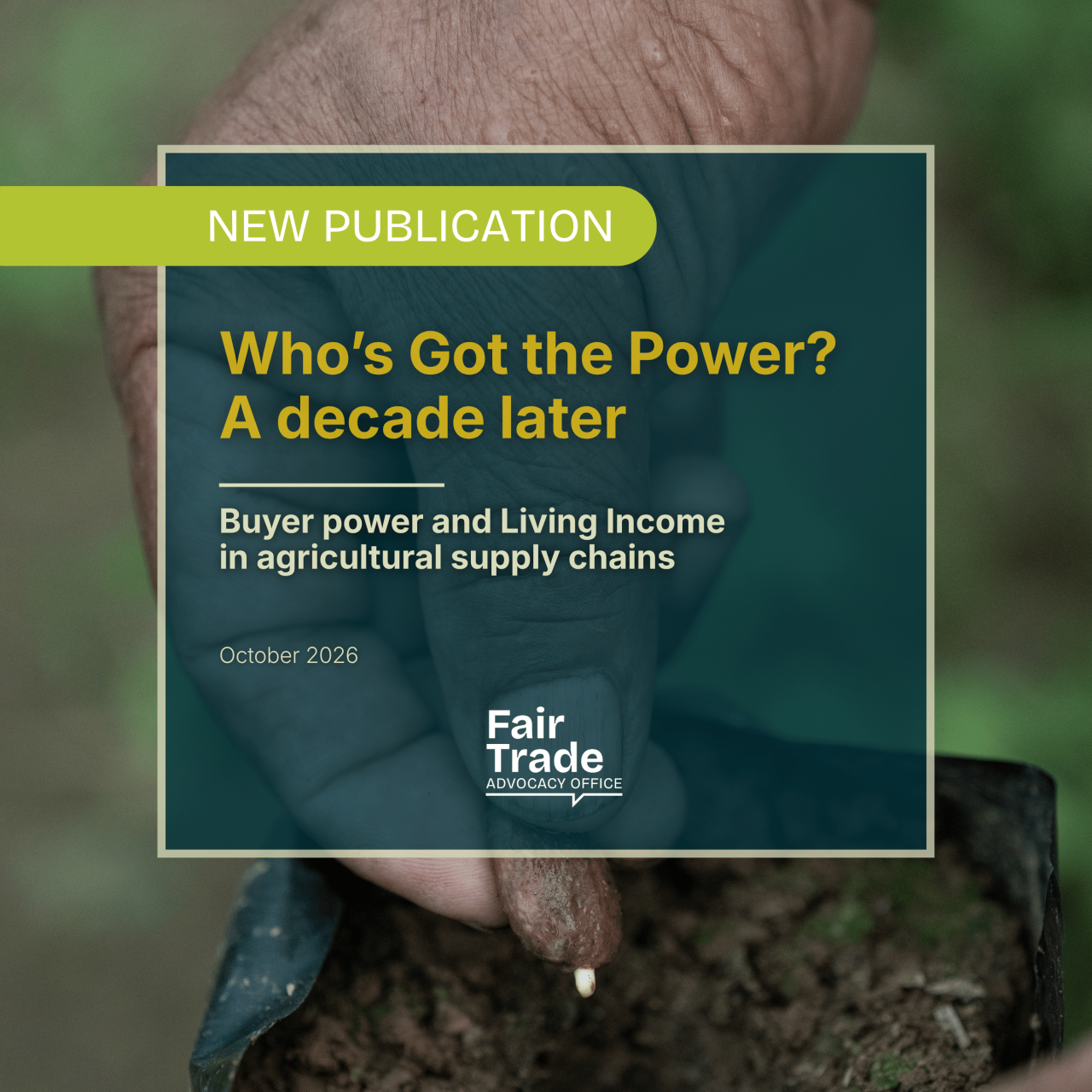
In 2014, the Fair Trade Advocacy Office, together with Plate-Forme Française du Commerce Équitable, Traidcraft and Fairtrade Germany, published a
study exploring the issue of power concentration in agricultural chains. The research found that buyer power produces recurring patterns which allow leading firms to control suppliers upstream. Such imbalances resulted in abusive and unfair trading practices, while EU policy was poorly equipped to address the problem.
More than a decade later, the diagnosis has become even harder to ignore. Farmers and workers still struggle to secure a fair share of the value they create, but the challenge goes beyond prices. Across many agri-food chains, the business models and structural conditions still treat the costs of sustainable production, decent work, regulatory compliance and ecological transition as costs to be pushed upstream. This directly undermines the right of farmers to a living income.
The policy context has also changed. The EU Unfair Trading Practices Directive now provides a level playing field, in relation with some of the terms of contract that no buyer, no matter its bargaining power, may impose upon suppliers. However, the Directive has limitations, firstly it only addresses the symptoms of the problem (the abusive practices), and not the causes (the imbalances of power), secondly its first evaluation shows its weaknesses: low awareness, fear of retaliation and uneven enforcement between Member States.
Meanwhile, the Corporate Sustainability Due Diligence Directive (CSDDD) changes the frame by recognising living income and living wage as human-rights standards that companies must address through due diligence. At the same time, new regulations such as the EU Deforestation Regulation (EUDR) and the EU Organic Regulation show how compliance costs and administrative burdens can be pushed upstream onto small-scale producers and cooperatives, without corresponding price increases or cost-sharing by buyers.
With this report, we revisit the original study to recontextualise it in today’s policy and market landscape: with buyer power becoming the central challenge for a living income, policy coherence and fair market governance.
Read the full report here.
Get in touch
For more information about our work on Unfair Trading Practices (UTPs), please contact our Managing Director, Jorge Conesa, at conesa@fairtrade-advocacy.org.
This publication has been produced with the support of the Sustainable Agricultural Supply Chains Initiative (SASI) and Deutsche Gesellschaft für Internationale Zusammenarbeit (GIZ).
More From The Workstream
Joint letter by Fair Trade organisations: Ensuring an accurate understanding of Fair Trade
Joint position paper: Strengthening the EU Unfair Trading Practices Directive (EU) 2019/633
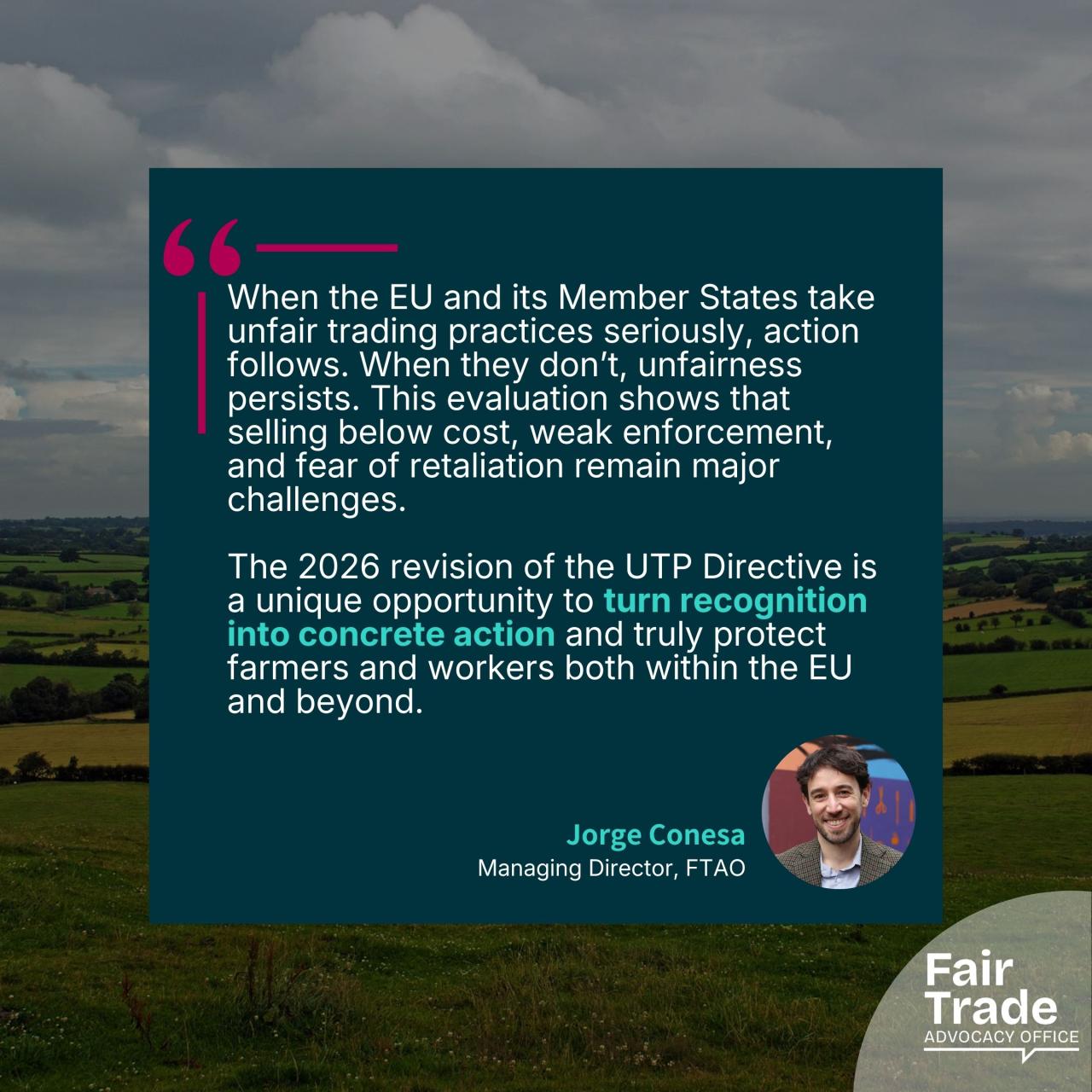
The FTAO acknowledges the EC's evaluation of the Directive on Unfair Trading Practices and welcomes its analysis aimed at closing the remaining gaps