The FTAO acknowledges the EC's evaluation of the Directive on Unfair Trading Practices and welcomes its analysis aimed at closing the remaining gaps
Despite the positive steps taken, the evaluation reveals that sales below the cost of production continue, enforcement remains weak in some Member States and farmers, both within and beyond the EU, still lack the empowerment they need.
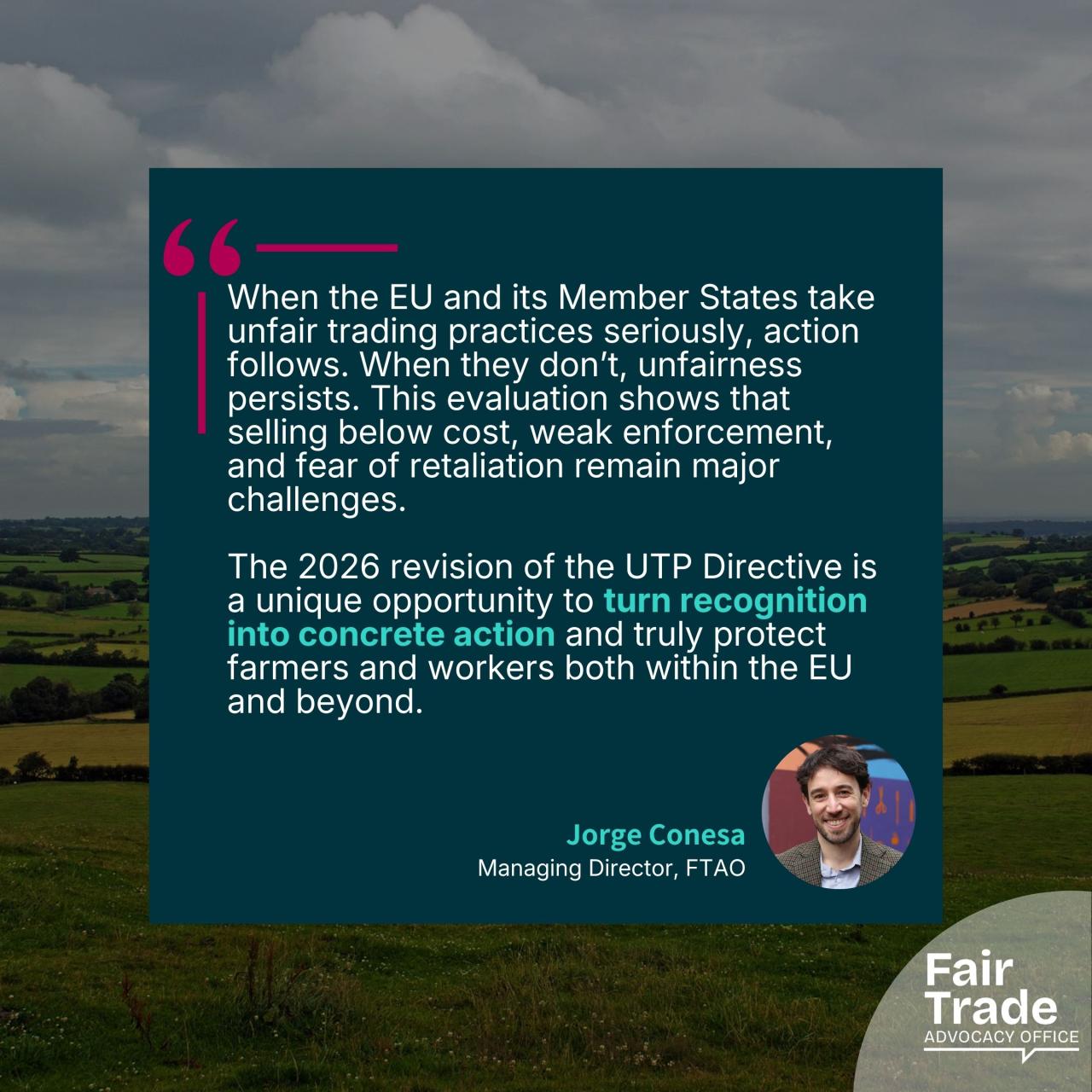
“When the EU and its Member States take unfair trading practices seriously, action follows. When they don’t, unfairness persists. This evaluation shows that selling below cost, weak enforcement, and fear of retaliation remain major challenges. The 2026 revision of the Directive is a unique opportunity to turn recognition into concrete action and truly protect farmers and workers both within the EU and beyond.” Jorge Conesa - Managing Director, Fair Trade Advocacy Office (FTAO)
Our preliminary takeaways from the evaluation include:
- Progress, but a lot remains to be done: The Directive was never expected to eliminate all Unfair Trading Practices (UTPs), but the evaluation confirms it has reduced their occurrence and helped consolidate a business culture where fairness is increasingly part of the conversation.
- Selling below the cost of production remains unresolved: It is encouraging to see the Commission acknowledge this major gap. This recognition must now translate into concrete measures.
- Ex officio investigations can be crucial: They help overcome the fear of retaliation that limits the effectiveness of complaint systems. While the Directive allows supplier associations to submit complaints on behalf of members (Article 5), widespread use of this mechanism remains undocumented and needs improvement.
- Enforcement for non-EU suppliers is alarmingly weak: Spotting a shortcoming is the first step to addressing it. The FTAO welcomes that the evaluation clearly identifies this essential challenge, and we are looking forward to working with the European Commission’s Directorate-General for Agriculture and Rural Development (DG AGRI) to address it.
- Lessons from the most active enforcement authorities must be taken into account: Case studies show that proactivity, sufficient resources and political will are the ingredients of successful enforcement. Add to that meaningful cooperation with civil society, trade unions and farmers’ organisations, and you have the recipe for success.
- Numbers speak volumes: Over 4,500 investigations between 2021 and 2024 led to 754 cases and €41.9 million in fines. Yet 90% of these cases come from just four Member States (Spain, Italy, Cyprus and Hungary). This imbalance highlights the need for more consistent EU-wide enforcement.
The Fair Trade Movement has long championed practices that promote fairness, sustainability and equity in global supply chains. These principles are not only essential for protecting farmers and workers but also for building resilient and responsible markets. As the EU prepares for the revision of the Unfair Trading Practices Directive in 2026, the Fair Trade Advocacy Office (FTAO) stands ready to contribute its expertise and to work closely with civil society organisations and farmer representatives to make the most of the upcoming consultation.
Get in touch
For more information, please reach out to our Managing Director, Jorge Conesa, at conesa@fairtrade-advocacy.org.
More From The Workstream
Who’s Got the Power? A decade later - Buyer power and Living Income in agricultural supply chains
Joint letter by Fair Trade organisations: Ensuring an accurate understanding of Fair Trade
Joint position paper: Strengthening the EU Unfair Trading Practices Directive (EU) 2019/633