World Fair Trade Day at the European Parliament brings together EU policymakers, producers and experts
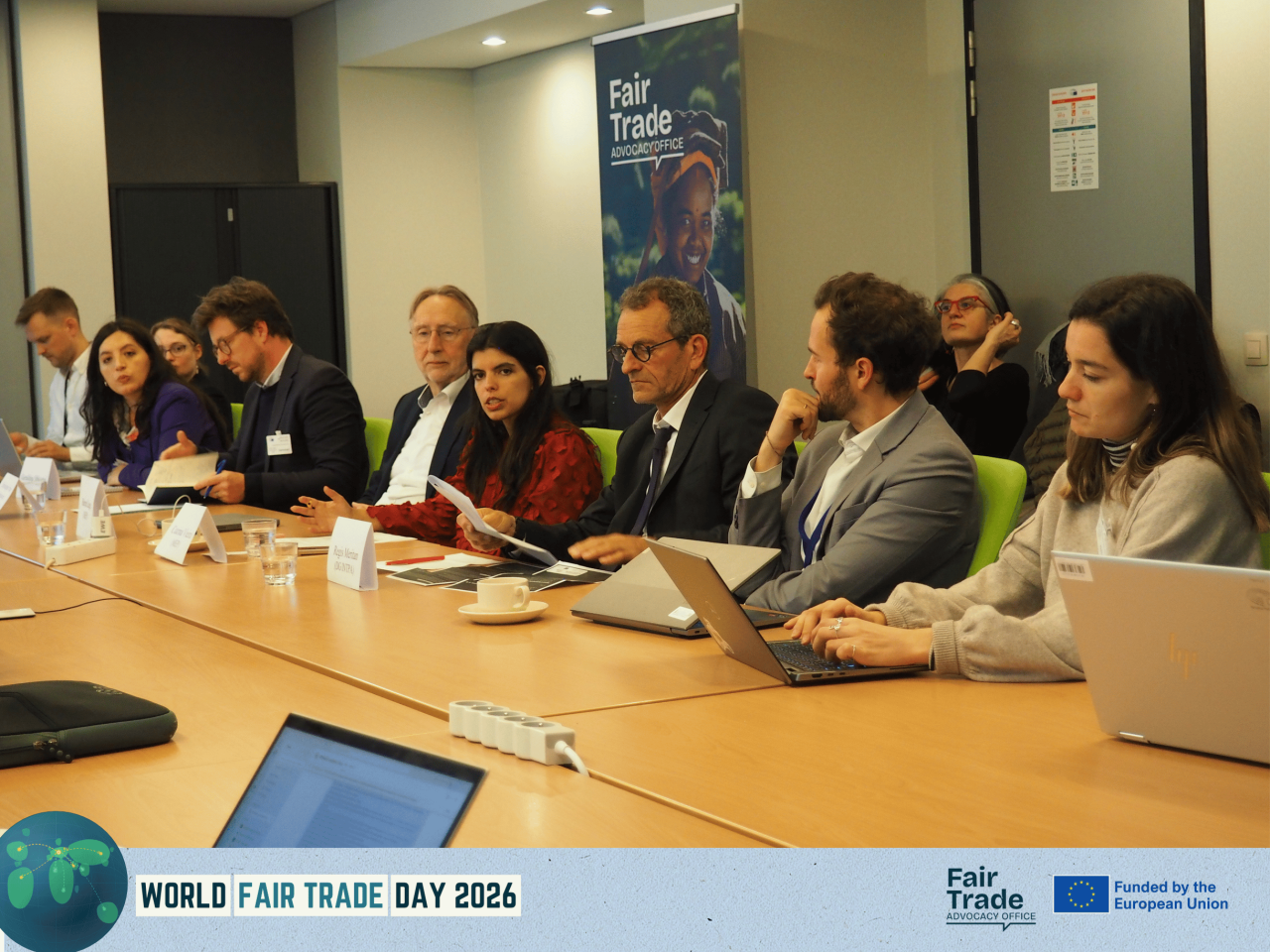
The event was hosted by the Co-chairs of the European Parliament's Fair Trade Working Group, MEPs Catarina Vieira and Bernd Lange, and brought together EU policymakers, farmer representatives, and experts to discuss how the EU's external action can effectively support the implementation of its growing body of sustainability regulations without leaving producers behind.
As new rules reshape global trade, they also risk creating unintended barriers for smallholder farmers and cooperatives who are already working toward sustainable practices but face structural challenges in meeting complex compliance requirements.
The first segment of the event focused on the implementation of the EU Deforestation Regulation, with contributions from the EU Delegation to Ghana; Regis Meritan, Head of Sector at Unit F3 – Sustainable Agri-Food Systems and Fisheries, European Commission's Directorate-General for International Partnerships; Christophe Van Orshoven, Project Manager at the European Forest Institute; and Geraldina Shkurtaj, Project Officer at Fairtrade International.
Contributions from these experts highlighted both the policy and on-the-ground efforts being made to better align regulatory ambition with the realities faced by producers. Discussions focused on the implementation of traceability requirements, efforts to tackle deforestation and the strengthening of due diligence systems. Speakers also emphasised the critical role of fair and stable pricing, noting how ongoing market disruptions risk undermining both compliance and long-term sustainability objectives.
The second segment turned to market opening and sustainable trade partnerships, with interventions from Damian Kaminsky, Head of Trade Section at the EU Delegation to the Dominican Republic; Yoriely Villalobos, President of CLAC, the Latin American Fairtrade producer network; and Jörg Wojahn, Head of Unit for Bilateral Relations, Trade and Sustainable Development, and the Generalised Scheme of Preferences, at the European Commission's Directorate-General for Trade.
The conversation explored how sustainable trade partnerships can be strengthened through cooperation between EU institutions, producer organisations and local stakeholders. Speakers highlighted that ensuring market access remains a central issue, and experiences from EU partner countries illustrated how cooperation efforts are yielding positive results, underlining the importance of reinforcing these partnerships.
Participants also reflected on the complexity of regulatory requirements, the costs associated with compliance and evolving market dynamics, raising questions about how to ensure that the burden does not disproportionately fall on smallholder farmers and SMEs. In this context, Fair Trade approaches were presented as offering valuable insights, demonstrating how equity, long-term partnerships, and fair pricing can contribute to more resilient supply chains.
In the closing remarks, Virginia Enssle, International and Institutional Relations Manager at the FTAO, commended the strong collaboration with EU institutions and emphasised the importance of continuing to work together to advance fairer trade structures: "If we partner up, we can make this a reality across the globe, and I think that is a beautiful legacy to leave behind."
The Fair Trade Advocacy Office extends its sincere gratitude to MEPs Catarina Vieira and Bernd Lange and to the European Parliament's Fair Trade Working Group, for hosting this exchange and for their continued leadership in advancing fairer and more sustainable trade policies. We are also deeply grateful to the high-level speakers from the European Commission, EU Delegations, and our partner organisations, as well as to all participants, for generously sharing their time and expertise to make this discussion both timely and substantive.