Recommendations for engagement with third-country actors on the ESPR Delegated Act for Textile Apparel
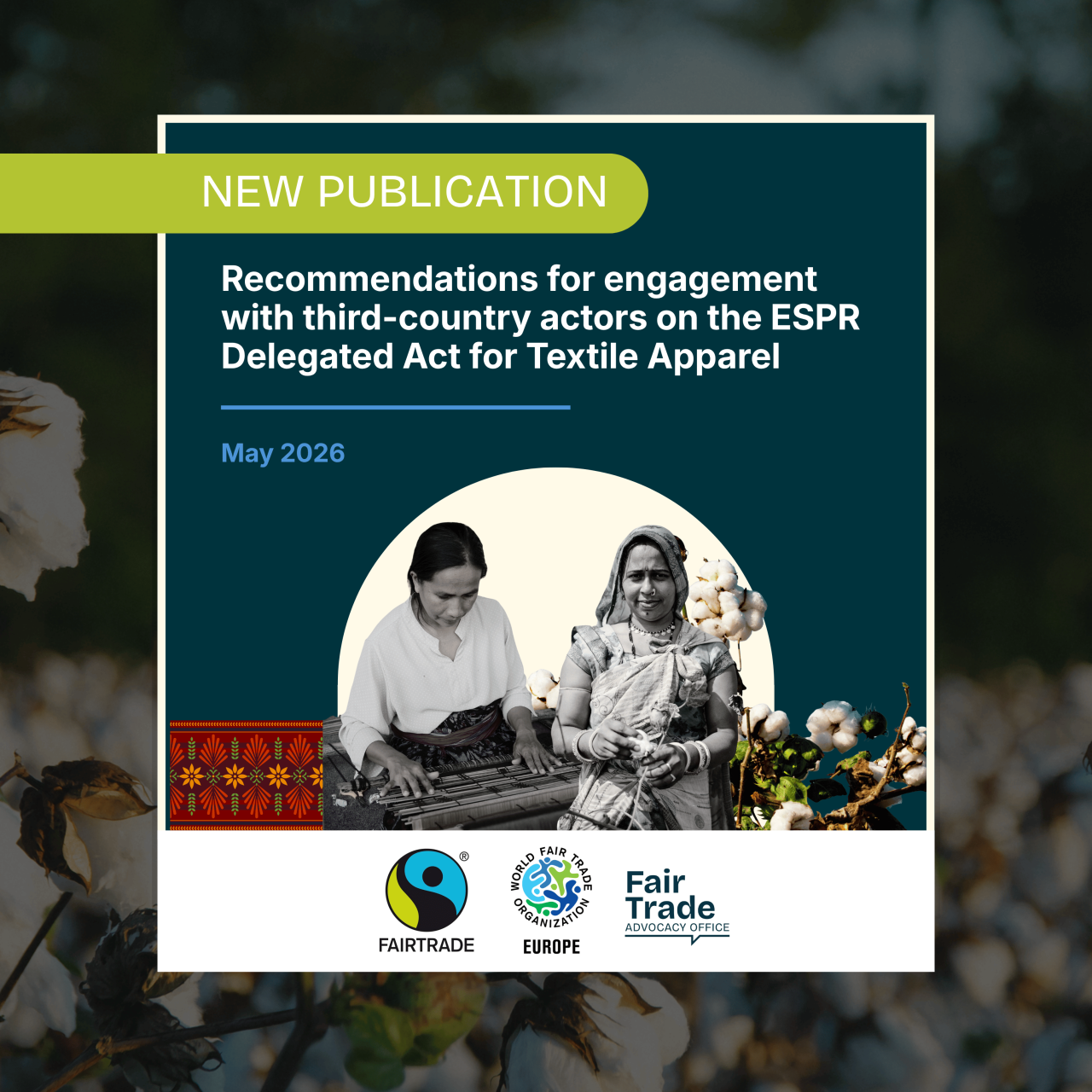
The Ecodesign for Sustainable Products Regulation (ESPR) aims to transform how products are designed, produced and required to perform by banning the least sustainable products from the EU market. Under the ESPR, the European Commission will issue a delegated act on textile products setting minimum performance criteria and information requirements, expected to start applying in 2029.
The Fair Trade Movement is committed to strengthening this legislation during the design and implementation of the textiles delegated act, in order to contribute to a fashion industry that is good for both planet and people.
Because the delegated act will apply to all textile products placed on the EU market, it will shape business practices across global textile value chains. Producers wishing to continue exporting to the EU will need to meet the sustainability criteria laid down in the ESPR regardless of where they are located, with significant implications for livelihoods and market access, particularly for smaller operators.
As the textile sector transitions towards greater sustainability under the ESPR, it is essential that this transition is also just. Workers, smallholder farmers, artisans and micro, small and medium enterprises (MSMEs) should not bear disproportionate costs but should be supported in the shift and meaningfully involved in the development of the legislation.
This paper provides recommendations on how the European Commission should engage third-country actors in the development and implementation of the ESPR textiles delegated act. Meaningful consultation is necessary to assess impacts and ensure implementation measures, including support for non-EU SMEs, are realistic, accessible and effective in practice.
The paper argues that engagement cannot be limited to EU-based stakeholders. It requires impact assessments that engage and assess impacts on smallholder farmers, artisans and workers, and implementation support co-designed with the actors it is meant to serve, including those outside the EU.
You can read the full set of recommendations here.
This publication is an initiative of the Fair Trade Advocacy Office (FTAO) and has been endorsed by the World Fair Trade Organization–Europe (WFTO-E) and Fairtrade International.
Get in touch
For more information, please reach out to our Senior Policy and Project Coordinator, Alena Kahle at kahle@fairtrade-advocacy.org.
More From The Workstream
Why the Digital Product Passport is (also) a public procurement story
What cotton farmers and artisans taught me: Reflections from the Organic Cotton Summit in Istanbul
The FTAO's feedback on the European Commission’s draft Implementing Regulation establishing the Digital Product Passport (DPP) registry