Landscape of EU policies and good practices at national and sub-national level on sustainable food consumption
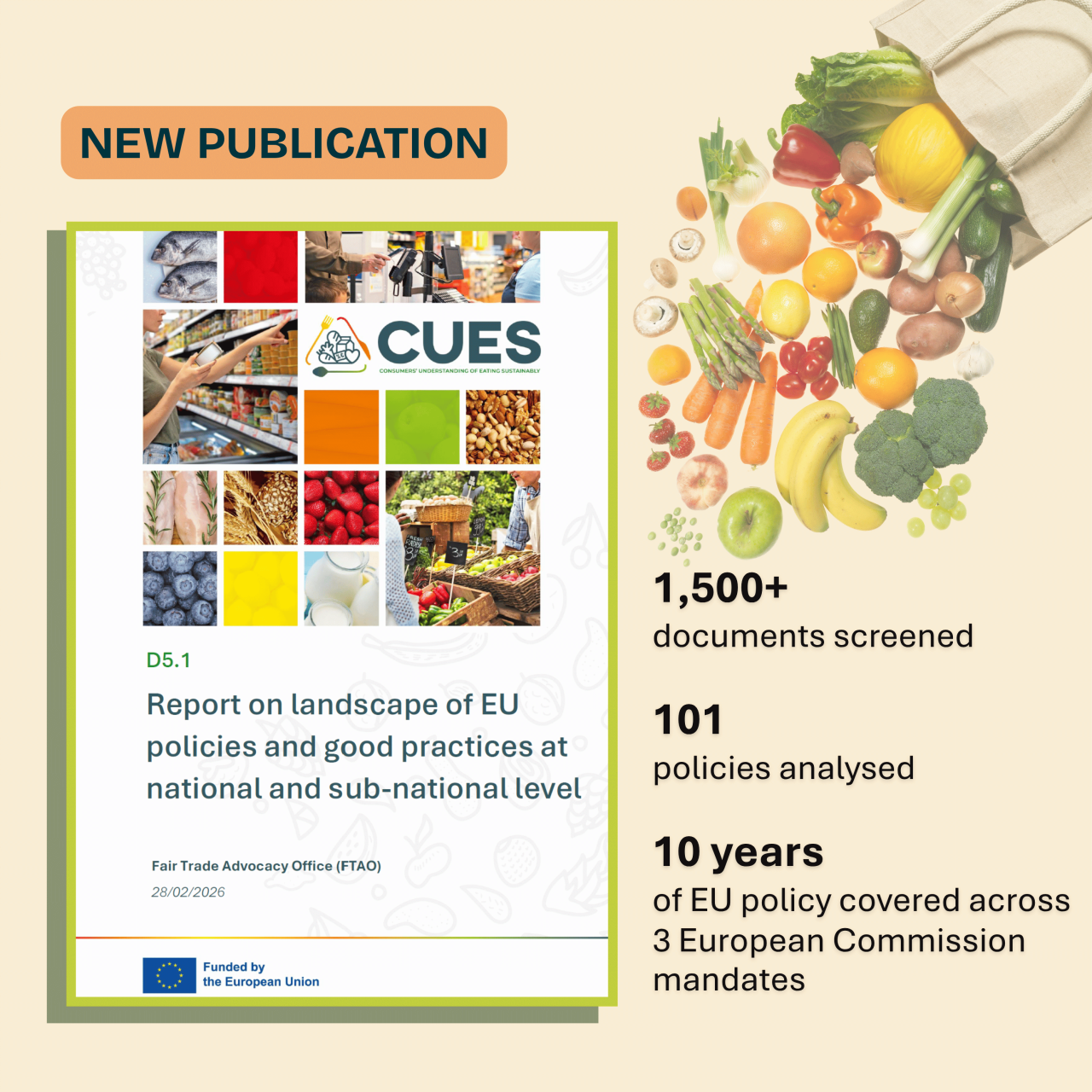
Screening over 1,500 documents and analysing 78 published and 23 unpublished EU initiatives from 2015 to 2025, the research provides a comprehensive picture of how EU-level policies approach sustainable food consumption, particularly through communication to consumers and where the key gaps lie.
The findings show that while EU policies provide important foundations through common objectives, labelling rules and minimum standards, they rely heavily on voluntary measures and fall short of shaping food environments, affordability or consumption patterns through binding instruments. National and regional governments have stepped in with more structural approaches, from public procurement to fiscal incentives and dietary guidelines, but their efforts remain uneven and fragmented in the absence of stronger EU-level leadership. The report draws on these best practices to illustrate what more coherent and ambitious EU policy could look like.
This publication has been produced by the Fair Trade Advocacy Office and Heidelberg University (UHEI) as part of the Horizon Europe project CUES (Consumers' Understanding of Eating Sustainably).
About the CUES Project
CUES addresses the urgent need for a more sustainable food system that benefits the environment, society, and the economy. The project aims to foster a Triple Change in the food system concerning culture, food value chain, and policy. To this end, CUES will pilot nine food system interventions and policy dialogues, actively involving consumers, food value chain actors and policymakers. A learning community and toolkits for behavioural change and communication will be developed to motivate 3 million consumers to make sustainable food choices.
More information about CUES can be found on the project's website: cuesproject.eu

More From The Workstream
Organic Regulation deal gives certainty to Fair Trade producers
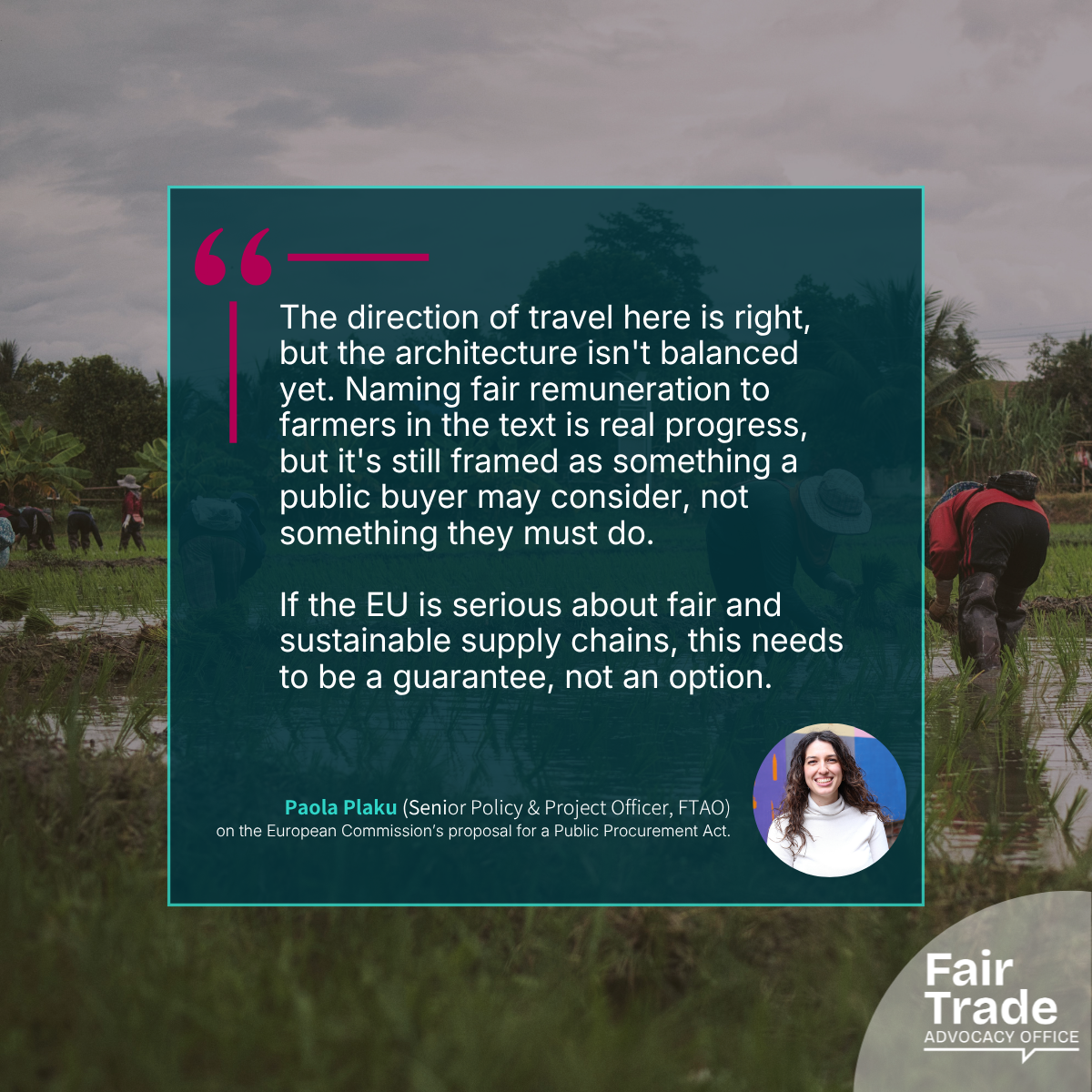
EU Public Procurement Act takes a step toward fairness, but legal guarantees are still missing
The revision of the EU’s rulebook for Public Procurement, a chance to deliver fairness