Fundamentals for a Global Fair Ecological Transition
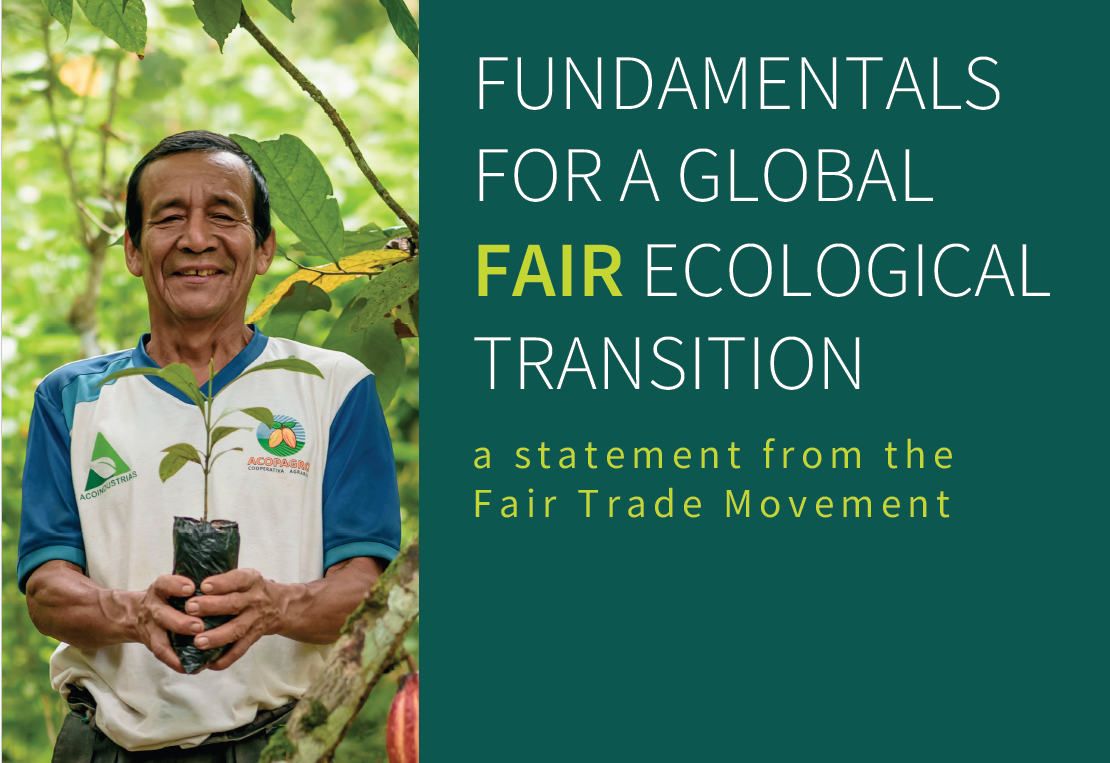
Lack of access to land, water, seeds and other natural resources; climate change effects; lack of living incomes and living wages; market pressure, to only cite a few, are all increasing challenges faced by farmers, workers and artisans worldwide.
Many global value chains are characterised by hazardous and exploitative conditions under which farmers, workers and artisans are frequently denied the opportunity to exercise their fundamental rights and lack living wages or living incomes.
Power concentration in global value chains, price pressures and the unequal distribution of value along value chains all impede the full enjoyment of human rights. Adding to structural socioeconomic inequalities through which ethical and ecological consumption choices are mostly accessible to the middle and upper classes, and where prices paid to farmers and producers do not reflect the true cost of production, and thus prevent them from covering their most basic needs.
The world is witnessing the devastating consequences of climate change. Paradoxically, those who are contributing the least to the climate crisis are the ones at the forefront, facing most of its negative effects. The time has come to reverse that trend. Smallholder farmers require support and adequate tools to be able to cope with these new realities and make the transition towards viable, resilient and sustainable production practices.
The current global threats we are facing have demonstrated not only how interdependent the world and global value chains are. But also how environmental destruction, climate, health and political crises are all interconnected and often share the exploitation of people and planet as a common root cause. Business as usual is no longer an option. It becomes clear that a transition towards redefined, truly fair ecological models is required. On a global level, we need a different way of producing and of consuming.
Read the full statement here.
More From The Workstream
Fair Trade for climate: How fair trade is central to climate resilience

A plea for a Green Deal that unites forces within and beyond EU borders
Open Letter to EU Decision-makers on the EU contribution to the UNFCCC COP29 and the advent of a Global Green Deal