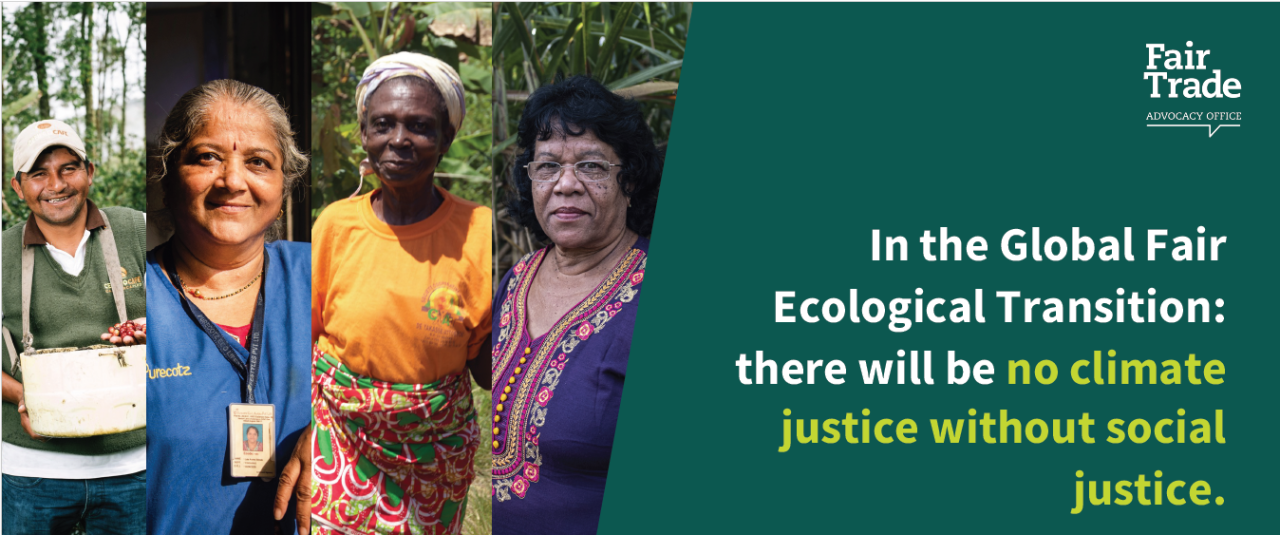
In the Global Fair Ecological Transition: there will be no climate justice without social justice
How can we build a future that is inclusive, equitable and green? A future that is socially, economically and environmentally sustainable?
Tackling the climate crisis is not only an ecological necessity.
It is also a social justice issue and a matter of survival for the most vulnerable who face extreme weather conditions and perennial disasters.
We need Climate Justice to provide fair, inclusive, and sustainable solutions to people disproportionately affected by the climate crisis, while addressing the root causes of climate change.
However, there can be no Climate Justice without also addressing global socioeconomic inequalities. How can we ensure that societal benefits and burdens are shared fairly? How do we move beyond policies that merely compensate and instead increase social justice?
The climate crisis being one of the driving forces behind injustice, social justice cannot be differentiated from climate policy.
Smallholder farmers, artisans, workers, and those in vulnerable and marginalised positions are now the most exposed to the impacts of climate change as they often live in high-risk areas for wildfires, drought, and/or flooding.
The climate conversation and decision-making must acknowledge the inequalities that exist between those on the frontline facing the impacts of climate change, and those who have the privilege of accessing a wide range of resilience options.
A farmer who does not earn a living income is less likely to prioritise climate actions because food security might have to come first. Therefore, Fair Trade aims to ensure smallholder farmers have a voice at the climate negotiating table to guarantee their sustainable futures, their livelihoods, and their survival.
To rally for Climate and Social Justice, the Fair Trade, organic, social enterprise, cooperative, social solidarity, and economy movements are joining forces.
Addressing the climate crisis is more than just reducing our carbon footprint.
Climate actions and goals must also address people’s needs and suffering, especially those who feel its impacts the most. It is a matter of Climate Justice.
In its broadest sense, justice is about people receiving what they are due. This must happen within the constraints of our living planet, where everyone deserves to live in a world where everyone enjoys fairness and sustainability. An economy in which no one is left behind.
Read the full position here.
More From The Workstream
Fair Trade for climate: How fair trade is central to climate resilience

A plea for a Green Deal that unites forces within and beyond EU borders
Open Letter to EU Decision-makers on the EU contribution to the UNFCCC COP29 and the advent of a Global Green Deal