Corporate Sustainability Due Diligence
The behaviour of companies will have a substantial impact on our ability to achieve the UN’s Sustainable Development Goals. Extreme poverty and human rights violations still prevail in many global supply chains, and to disrupt this trend, it is essential that companies are held accountable for their conduct.
To tackle this challenge, the European Union adopted the Corporate Sustainability Due Diligence Directive (CSDDD) in July 2024. However, in early 2025, the CSDDD was reopened as part of the Omnibus I simplification package on sustainability regulations. As a result of political compromises reached during the trilogue negotiations, the final text of the CSDDD was adopted by the EU co-legislators in December 2025, representing a significant departure from earlier ambitions, falling short of creating a level playing field for responsible businesses and failing to maintain essential protections for smallholders and workers.
The Directive’s scope has now been limited to companies with over 5,000 employees and a €1.5 billion turnover, and its application has been delayed to July 2029. At the same time, it constitutes the first legally binding obligation for companies to adjust their purchasing practices if these cause adverse impacts, and recognises that workers have the right to a living wage and self-employed persons, such as smallholder farmers, to a living income.
Our View
The FTAO welcomed the introduction of the CSDDD in July 2024 and worked to ensure that it was designed and implemented in a way that tangibly improves the lives of rightsholders. Throughout the initial negotiation process, as well as following the introduction of the Omnibus I simplification package, the FTAO has advocated for risk-based engagement across supply chains and prioritised dialogue with affected stakeholders, ensuring a smallholder-farmer- and worker-inclusive law that tackles the challenges faced by the most vulnerable actors in supply chains, within and beyond European borders.
As the Directive moves into the implementation phase, the FTAO will continue its engagement with policymakers, businesses, civil society and the Fair Trade Movement to ensure a more ambitious transposition at the national level, alignment with international standards and adequate financial and technical support for rightsholders. Even in its weakened form, the CSDDD can only contribute to positive change if its implementation prioritises collaboration, shared responsibility and tangible improvements for those most affected by corporate practices.
Get in Touch
Need more information? Contact our policy expert!

Alena Kahle, Senior Policy & Project Coordinator
kahle@fairtrade-advocacy.orgFurther Reading
The Fair Trade Movement’s recommendations for the revised Delegated Act on the European Sustainability Reporting Standards (ESRS)
29 CSOs call on the EU to protect the ambition of the ESRS and uphold strong standards for a resilient Europe
Guidelines for a Living Income: Fair recommendations for Living Income Guidance in the Corporate Sustainability Due Diligence Directive
Trilogue deal on CSDDD is a step backwards for responsible business conduct
JOINT STATEMENT: Call for European Parliament to deliver a credible and ambitious approach on Omnibus I
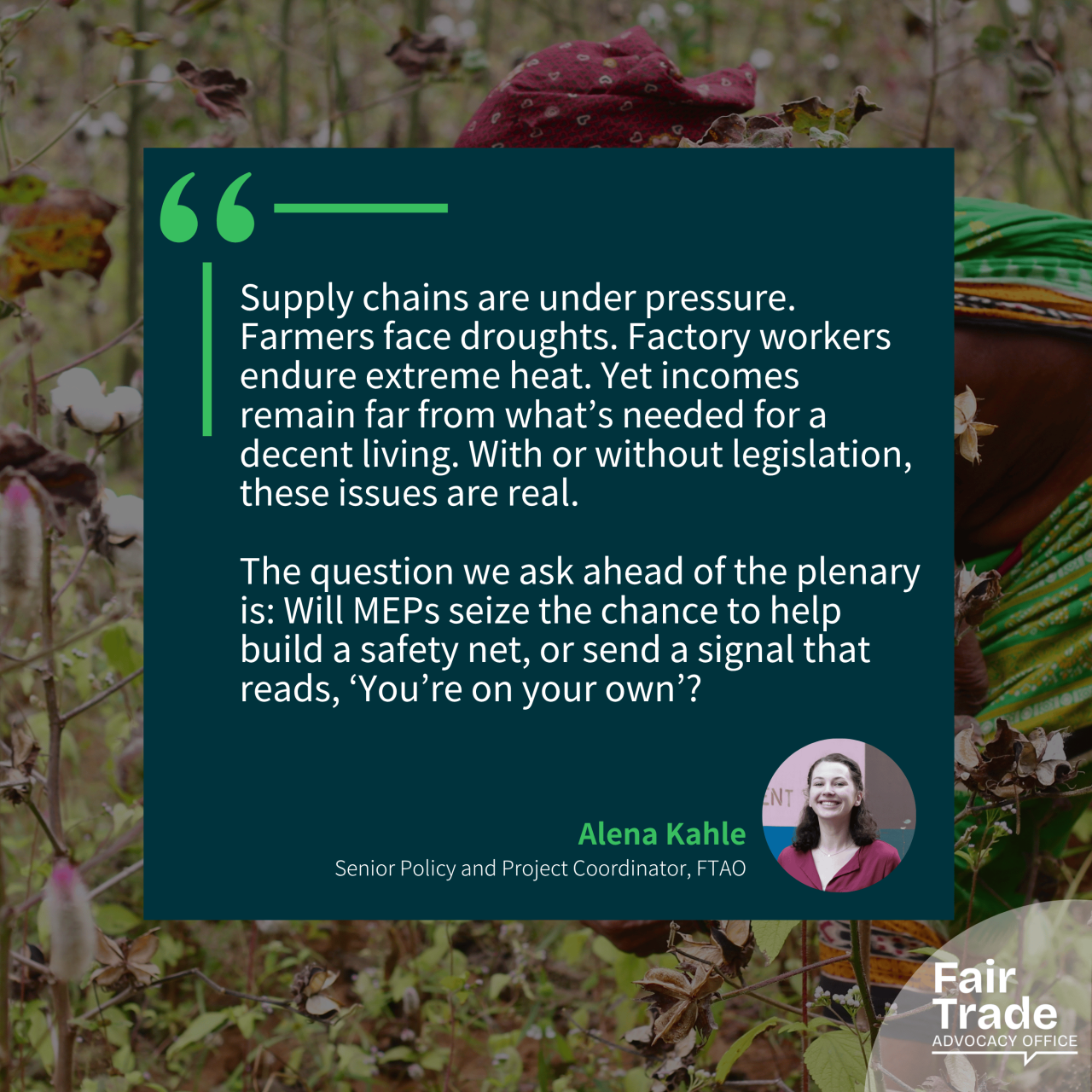
Fair Trade Movement urges MEPs to seize the opportunity to strengthen CSDDD in upcoming plenary vote
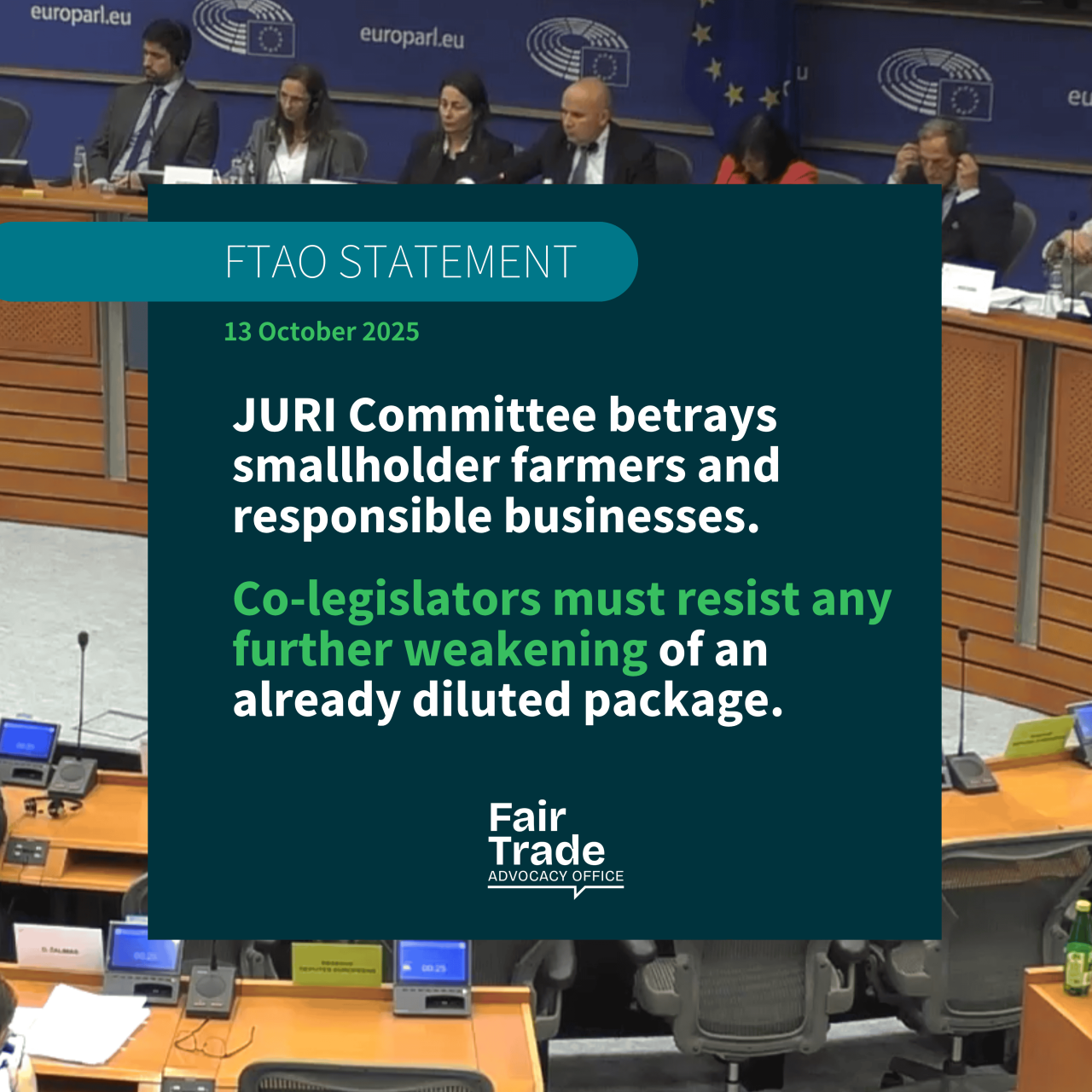
JURI Committee betrays smallholder farmers and responsible businesses; Co-legislators must resist any further weakening of an already diluted package